The rules at a glance
| Arrival | 15 minutes before your slot — per the Headout listing |
|---|---|
| ID | May be requested; it should match the booking name |
| Bags | Large backpacks and suitcases not allowed; cloakroom near the entrance |
| Food & drink | Not allowed in the halls |
| Photography | Allowed without flash; no tripods or video rigs |
| Animals | Service animals only |
| Dress code | None enforced — comfortable shoes matter most |
Before you enter: timing and ID
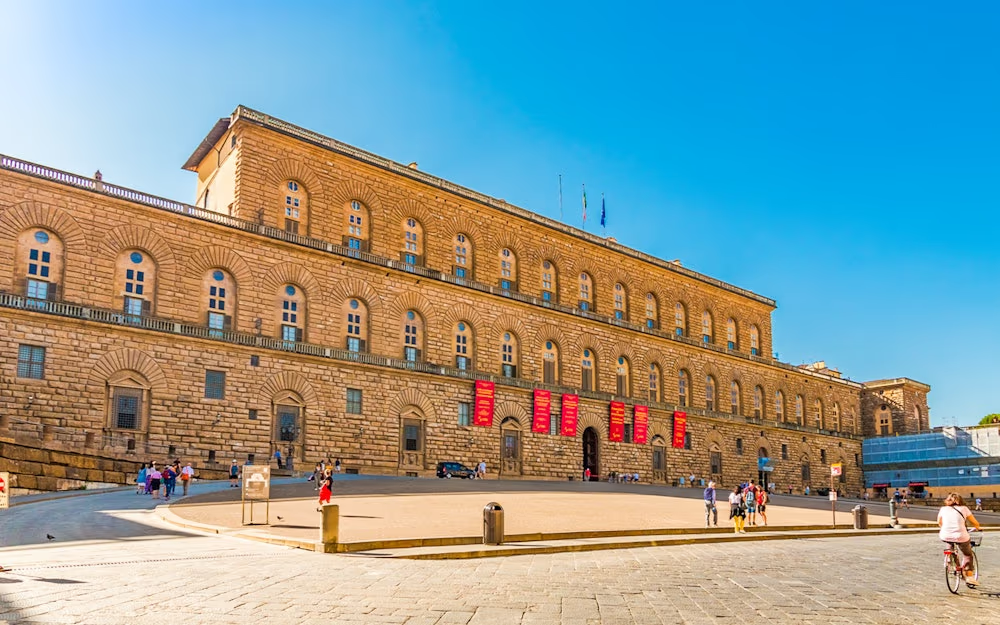
Per the Headout listing, plan to arrive 15 minutes before your time slot. That buffer is not bureaucratic padding — it covers the walk across the sloped Piazza de' Pitti, finding the right entrance line and the security check. Cutting it fine on a busy morning is how people miss their slot.
Bring ID matching the name on the booking: staff may ask for it, and it is also how free tickets for under-18s and reduced EU rates are verified. If you booked for a group, the lead booker's document is the one that counts. Directions to the entrance are on the how-to-get-there page.
Bags, backpacks and the cloakroom
Large backpacks and suitcases are not allowed in the museums — there is a cloakroom near the entrance where they must be left (per the Headout listing). A small daypack or handbag is fine. If you are visiting between trains, budget a few extra minutes for the cloakroom queue at each end, or better, leave luggage at a deposit near the station. Umbrellas with a point may also be asked into the cloakroom on quiet-weather days.
Inside the halls: food, photos, animals
- No food or drink in the halls. A sealed bottle can stay in your bag; drink in the courtyard or the gardens.
- Photography is allowed without flash. No tripods, no video rigs. Flash damages pigments over time, which is why wardens react quickly to it.
- Animals: only service animals are admitted.
- Voice and phones: no formal rule, but the frescoed halls carry sound — calls are for the courtyard.
The low-light halls of the Palatine Gallery reward a camera that handles shadows; see the photo gallery for what to expect before deciding how much gear to carry.

Dress code: courtesy, not law
There is no formal dress code at the Pitti Palace. Unlike Florence's churches, the palace is a state museum, and nobody measures sleeves at the door. The shoulders-and-knees guidance you may have read is a courtesy that fits the setting, not a rule that gets you turned away.
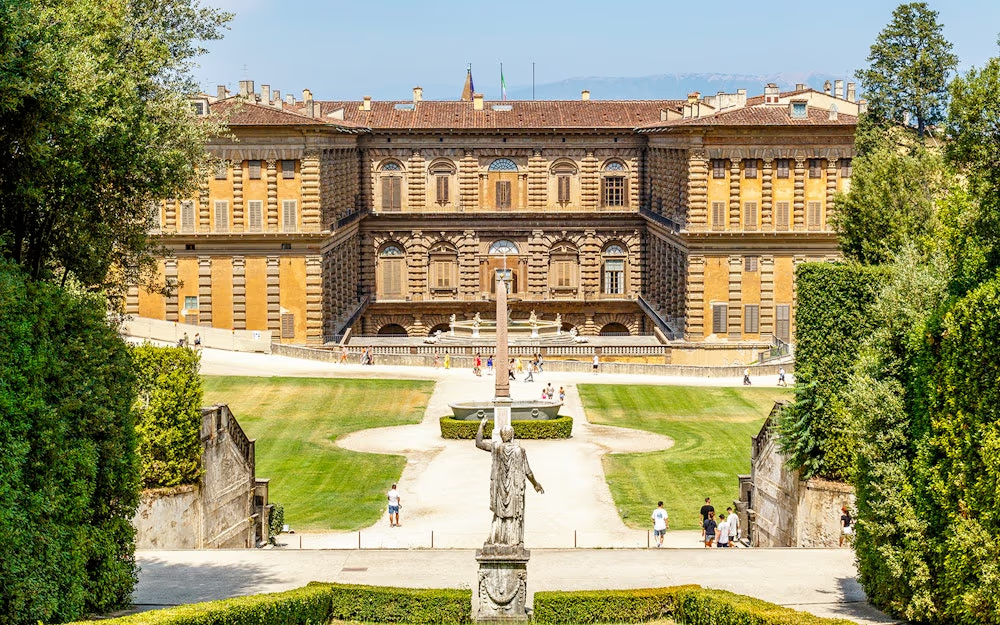
What actually matters is footwear. The palace means hours on stone floors across 32,000 m² of museums; the Boboli Gardens add gravel paths and real climbs over 45,000 m². Sandals with thin soles and new shoes both lose here. If you plan the full estate, check the Boboli combo page and dress for a hill walk, not a gala. In summer, a hat and water for the gardens beat any outfit consideration.
Accessibility: palace easy, gardens hard
Per the Headout listing, the palace is equipped with ramps and lifts and has adapted toilets. The main museums are reachable on wheels, and staff will point you to the lift routes between floors — the palace map helps you plan the order of the galleries.
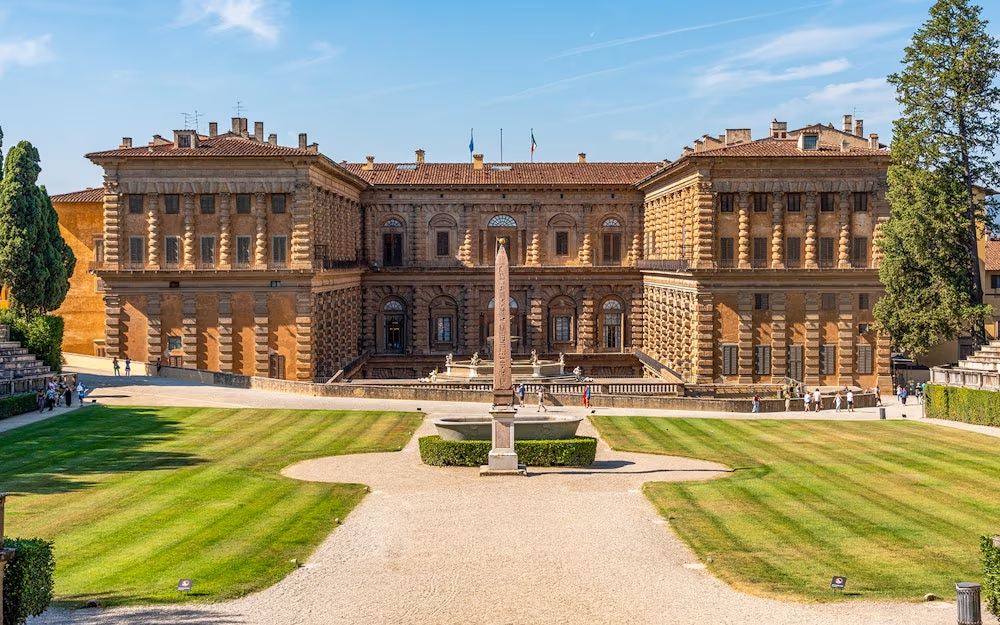
The honest caveat is the Boboli Gardens: slopes and deep gravel make most of the garden hard work for wheelchairs and difficult even with a mobility scooter. If mobility is limited, a palace-only ticket is usually the better buy — you get all five museums and skip the part of the estate that fights back. Companions who do want a taste of the gardens can manage the amphitheatre area behind the palace, the flattest section closest to the exit.
Visiting with kids
Strollers are allowed, and the lifts make them practical inside the palace; in the gardens, swap to a carrier for the upper terraces. Kids 0–17 enter free with a reserved ticket, so the cost question disappears — the stamina question doesn't. The quiet-museum expectation is real but tolerant: wardens are used to children, and the courtyard and gardens are the pressure valves when energy runs high. A focused hour on the masterpieces beats three hours of everything.
What if you're late for your slot?
Honestly: grace periods aren't guaranteed. On a quiet January afternoon, staff may wave a slightly late arrival through; on a sold-out spring morning, the next slots are full and there is nowhere to put you. Timed tickets are generally non-refundable once booked, so the only reliable protection is the boring one — arrive early. If your day is running long, drop a museum from the plan rather than the buffer before your entry time; the how-long-to-visit page shows what fits in the time you have.
Rules above reflect the Headout product listings as of August 2026, plus standing Italian state-museum practice. For discounts and free-entry days, see prices & discounts.
Frequently asked questions
Is there a dress code at the Pitti Palace?
No formal dress code is enforced. It is a state museum, so covered shoulders and knees are a courtesy rather than a rule — nobody checks hemlines at the door. Comfortable shoes matter far more: the palace floors are stone and the Boboli paths are gravel.
Can I bring a backpack into the Pitti Palace?
Small daypacks are fine. Large backpacks and suitcases are not allowed in the halls — per the Headout listing, there is a cloakroom near the entrance where bulky bags must be left. Travel light and you will move through security faster.
Is photography allowed inside the palace?
Yes, for personal use and without flash. Tripods and video rigs are not permitted. The Palatine Gallery is dim in places, so a camera or phone that handles low light well is the practical answer, not a flash.
Can I bring a water bottle?
You can carry a closed bottle in your bag, but eating and drinking in the halls is not allowed. Drink in the courtyard or the Boboli Gardens instead — and refill before a garden visit in summer, because the climb to the top terraces is exposed.
Are strollers allowed in the Pitti Palace?
Yes. Lifts connect the floors, so a stroller is workable inside the palace. In the Boboli Gardens the gravel and slopes make a baby carrier the easier choice for the upper terraces.
Is the Pitti Palace wheelchair accessible?
The palace itself is the accessible part: per the Headout listing there are ramps, lifts and adapted toilets. The Boboli Gardens are the hard part — steep gravel paths challenge wheels — so visitors with limited mobility usually get more from a palace-only ticket.