What the Palatine Gallery is
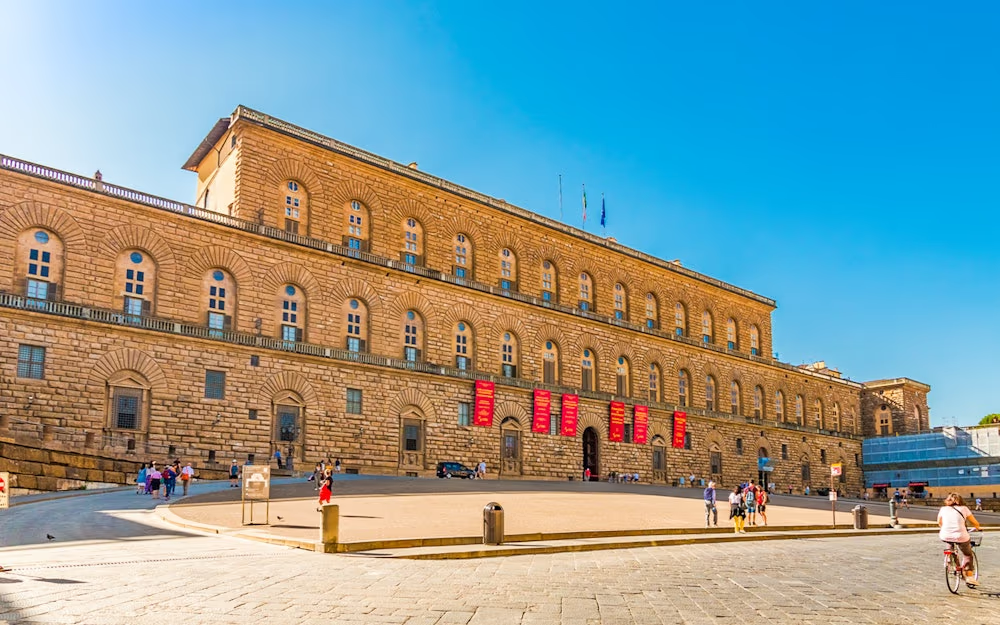
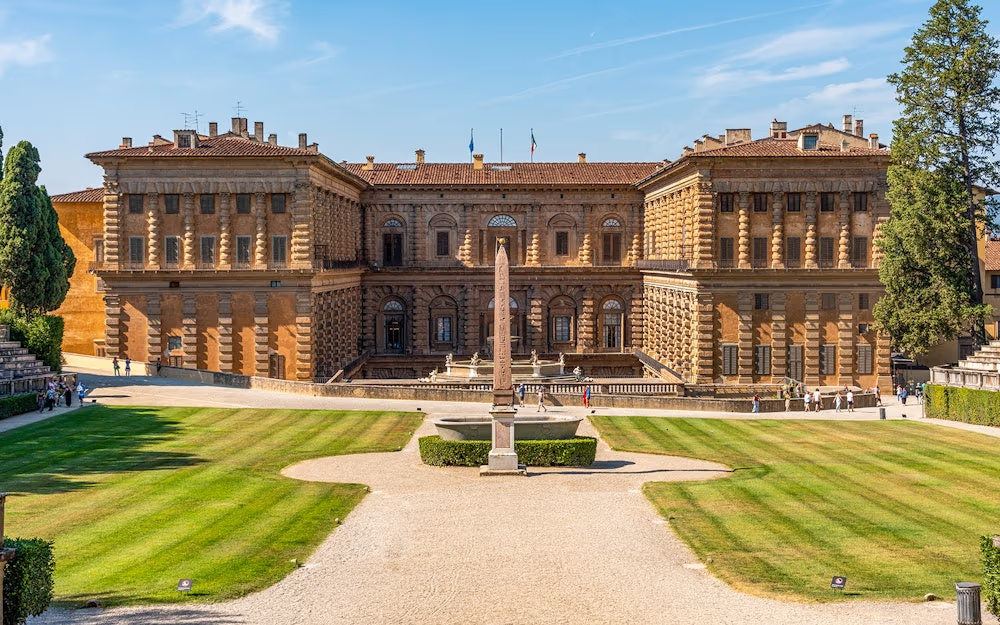
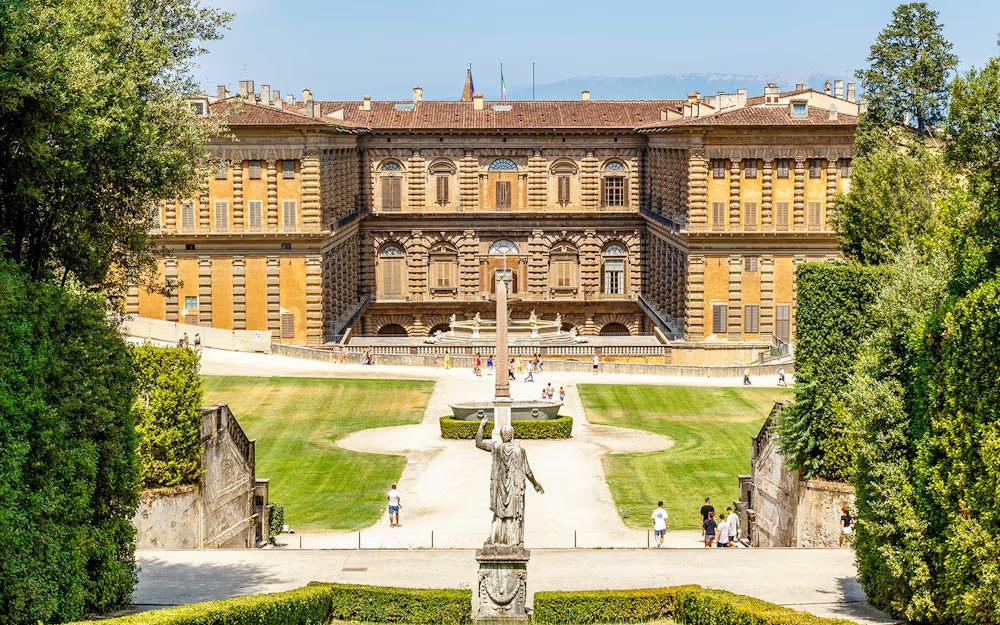
The Palatine Gallery fills 28 frescoed halls on the first floor of the Pitti Palace — the piano nobile, where the Medici grand dukes actually lived among their pictures. It holds over 500 paintings, the core of the family's private collection, shown in the same dense arrangement fixed in the 18th century. It is the largest and most visited of the five museums inside the palace, and it is included in every ticket tier — there is no separate admission.
First-time visitors often walk in expecting a modern museum — one masterpiece per wall, a label at eye level, a chronological route — and walk out overwhelmed. The gallery is none of those things, on purpose. The next section is the key to enjoying it.

How to read an 18th-century hang
The Palatine Gallery is a quadreria — a princely picture gallery arranged for decorative effect, not instruction. Paintings climb the walls three and four rows high, Renaissance next to Baroque, portrait next to altarpiece. Nothing is in chronological order, and that is the point: this is a preserved 18th-century interior, the collection displayed as furniture for power. Four habits make it legible:
- Read walls, not paintings. Each wall is composed like a single picture: a large canvas at the centre, symmetrical pairs flanking it, small cabinet pieces filling the corners. Stand back and take in the whole arrangement before stepping close to any one frame.
- Look for pairs and echoes. Hangers matched paintings by size, frame and colour — two dark portraits balancing each other, a warm landscape answering a cool one across the room. Spotting the symmetry tells you what the arrangers considered important: the centre of each wall is the wall's star.
- Let the ceilings set the theme. The room decides the mood, and the frescoed vault above names the room. In a quadreria, ceiling, stucco, frames and canvases work as one ensemble — glance up first, then down.
- Accept that you cannot see everything. The top rows hang four metres up. Choose eight or ten works to study properly — the list below is a starting point — and let the rest wash over you as décor, exactly as an 18th-century courtier would have.
Treated this way, the gallery stops being a chaotic warehouse and becomes something rarer than any modern museum: a picture collection still doing the job it was designed for.
The planet rooms: Pietro da Cortona's ceilings
The grandest sequence runs along the piazza side of the palace: five state rooms named after Venus, Apollo, Mars, Jupiter and Saturn. Between 1641 and 1665, Pietro da Cortona and his pupil Ciro Ferri covered their vaults with a Baroque fresco-and-stucco cycle that reads as one long compliment to the Medici: the young prince is educated by the planets' virtues — love tempered, arts mastered, war won, power assumed under Jupiter, wisdom reached with Saturn. The gilded stucco is so dense that the ceilings compete with the paintings below — which was the intention.
These five rooms also hold most of the gallery's headline works, so plan your energy accordingly: the route through the 28 halls saves the best ceilings and the best canvases for the same stretch. More on the palace's dynastic propaganda on the history page.

The artists to look for
Raphael
The Palatine holds one of the world's great Raphael groups. The Madonna della Seggiola — mother and child compressed into a perfect circle — was for centuries among the most copied paintings in Europe. La Velata, the veiled woman in a storm of silver silk, is his most intimate portrait; the Maddalena Doni, painted for a Florentine merchant's wife, shows him answering Leonardo's Mona Lisa pose head-on. Most hang in the Saturn Hall.
Titian
The Venetian counterweight, concentrated in the Apollo Hall: La Bella, a study in blue velvet and self-possession; the penitent Mary Magdalene, all hair and tears; and the Portrait of a Gentleman, whose grey-eyed sitter follows you across the room. Compare Titian's loose, warm flesh tones with Raphael's enamel finish two rooms away — the whole Renaissance argument between Florence and Venice in one corridor.
Rubens
Two essential canvases: The Consequences of War, a churning allegory painted while the Thirty Years' War wrecked Europe, with Venus failing to hold Mars back from the slaughter; and The Four Philosophers, a quiet group portrait that includes Rubens himself and his late brother — the painter at his most personal, a wall away from his most political.
Caravaggio, Botticelli, Andrea del Sarto
Caravaggio's Sleeping Cupid is a small, startling thing — a winged boy painted from what looks like an unidealised, sickly model, love asleep with its arrows idle. Botticelli is represented by refined early portraits and Madonnas, and Andrea del Sarto — Florence's "faultless painter" — appears throughout the gallery in a depth no other museum can match. For a ranked shortlist with room locations, see the masterpieces guide.
Practical notes
- Included in every ticket. Timed entry, Boboli combo and 5-day pass all cover the gallery — compare them on the tickets page.
- Where: first floor of the palace; the monumental staircase from the courtyard leads straight up to it. The route continues into the Royal Apartments at the far end.
- Audio guide: included with the Headout ticket via app; a separate rental if you buy at the desk. A private guide earns its keep here more than anywhere else in the palace.
- Timing: busiest from about 10 am to 2 pm. Book the 8:15 am slot or come after 3 pm; the palace is closed Mondays — check current hours.
- Pace: 90 minutes to 2 hours is realistic. If you have limited time in the palace, spend it here — the how-long guide has sample itineraries.
Frequently asked questions
Is the Palatine Gallery included in the Pitti Palace ticket?
Yes — every ticket tier includes it. The standard timed-entry ticket, the Boboli combo and the 5-day pass all cover the Palatine Gallery along with the other four palace museums. There is no separate Palatine-only ticket.
How long does the Palatine Gallery take?
Allow 90 minutes to 2 hours for the 28 halls at a comfortable pace, longer if you use the audio guide room by room. Most visitors spend more time here than in the other four museums combined.
Which paintings should I not miss in the Palatine Gallery?
Raphael’s Madonna della Seggiola and La Velata, Titian’s La Bella and Mary Magdalene, Rubens’ Consequences of War and Caravaggio’s Sleeping Cupid are the usual shortlist. Most hang in the five planet-named rooms along the piazza side.
Why are the paintings hung so high and close together?
The gallery preserves an 18th-century "quadreria" hang: pictures are stacked floor to ceiling and arranged by size, symmetry and colour harmony rather than by date or school. It shows the collection as the grand dukes themselves displayed it.
Is there an audio guide for the Palatine Gallery?
The Headout timed-entry ticket includes a multilingual audio guide via app, which covers the Palatine Gallery’s main rooms. Tickets bought at the palace desk do not include one — there it is a separate rental.
When is the Palatine Gallery least crowded?
At opening (8:15 am) and after about 3 pm. The rooms are busiest from roughly 10 am to 2 pm, when tour groups and day-trippers overlap. The palace is closed on Mondays, so Tuesday mornings run busier than usual.