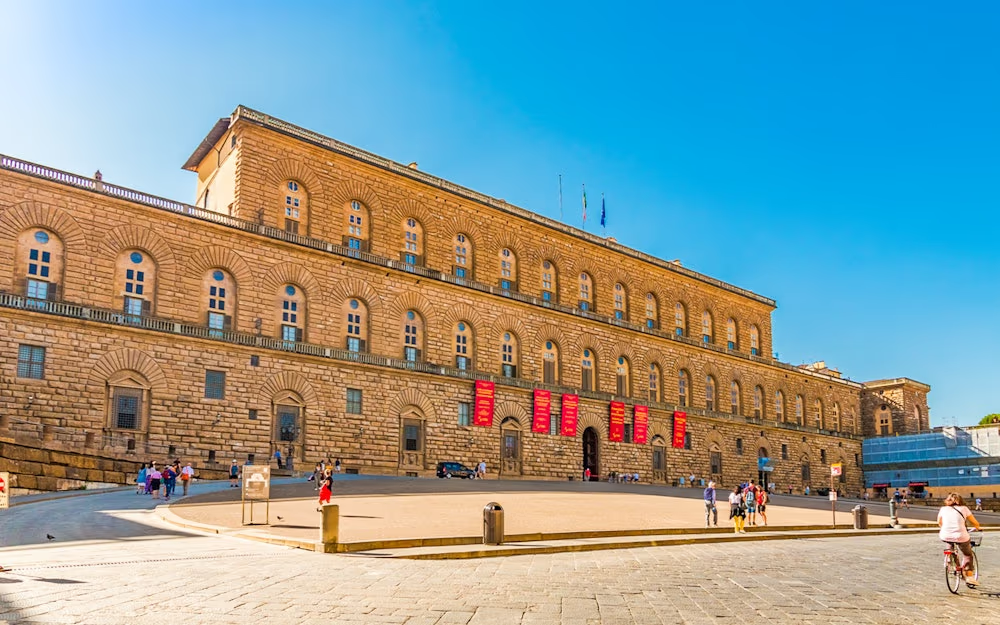
From the piazza the Pitti Palace reads as a fortress: 32,000 square metres of rough golden stone with small windows and no ornament. Cross the entrance hall and that austerity flips into some of the most decorated rooms in Italy. This page walks you through the interior in the order you will meet it, so the ticket you choose matches what you actually want to see.

Ammannati's courtyard: the palace's stone stage
The first great interior is open to the sky. Bartolomeo Ammannati built the courtyard in the 1560s for Cosimo I de' Medici, and it is a Mannerist manifesto: every column, pilaster and arch is wrapped in exaggerated rusticated stone, as if the fortress facade had grown inward and swallowed the classical orders whole. Stand in the centre and turn — three ranges of banded stone rise around you, with the fourth side opening uphill.
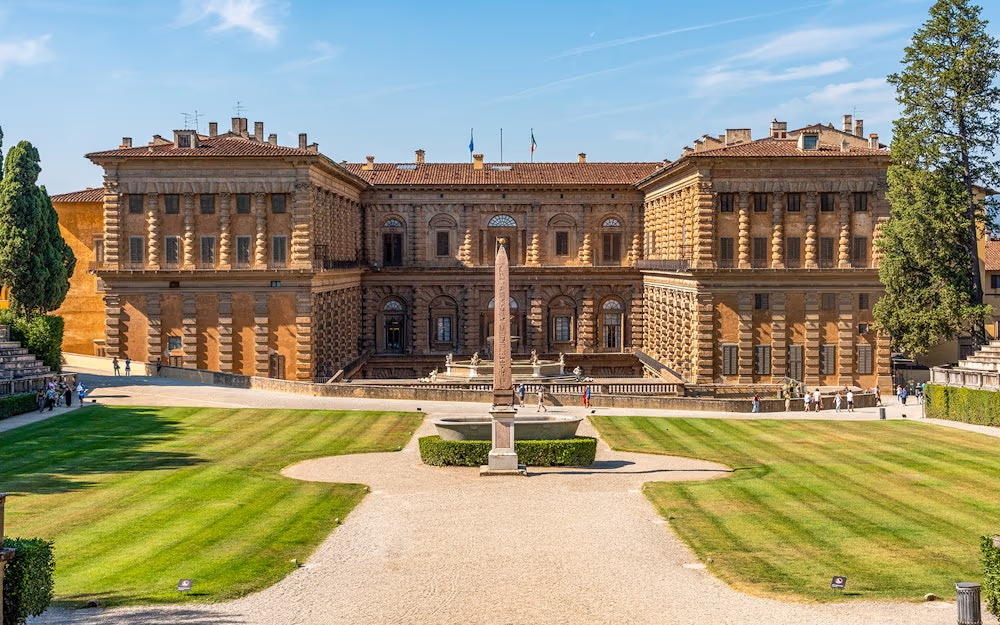
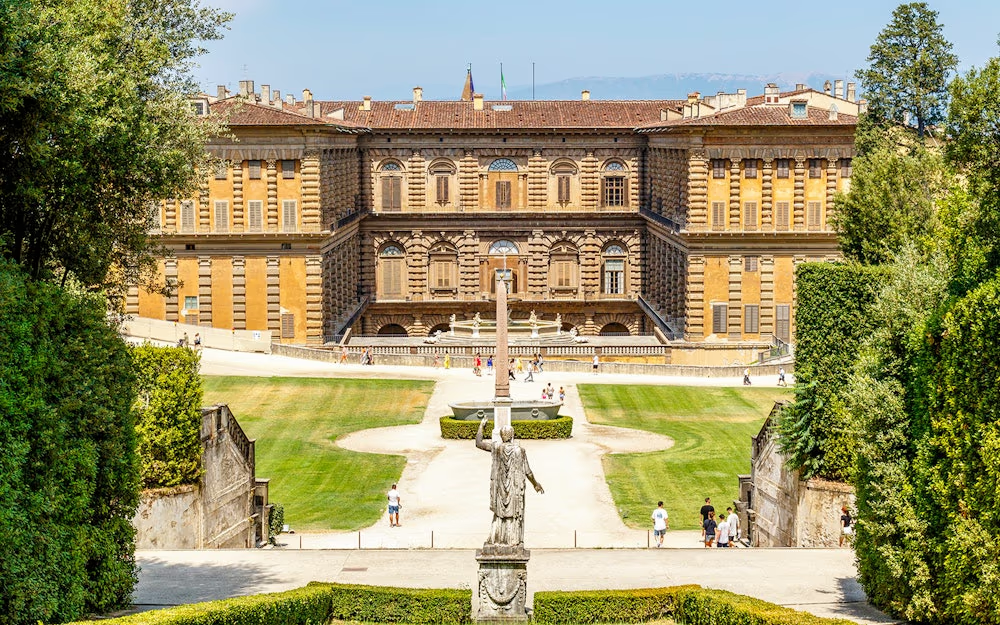
That fourth side is the trick to understand. The courtyard sits lower than the garden behind it, so it works as a hinge between palace and landscape: walk up the ramp and you emerge at the base of the Boboli amphitheatre, with the garden climbing the hill beyond. Court architects used this slope deliberately — the courtyard served as a stage for Medici weddings and water festivals, with spectators banked on the garden side. It still hosts summer concerts and events today. If you plan to continue into the gardens, the palace + Boboli combo covers both sides of that hinge on one booking.
Detail to catch before the stairs: the Grotto of Moses under the garden terrace, faced in porphyry, and the drip-shaped rustication on the lower columns — stone imitating dripping water, a pun the 16th century enjoyed.
The Royal Apartments, room by room
At the far end of the Palatine Gallery the picture halls stop and the palace becomes a home — fourteen rooms along the south wing where three dynasties actually lived. The Medici furnished them first; the Habsburg-Lorraine grand dukes remodelled them; then, when Florence briefly became capital of Italy in 1865, the House of Savoy redecorated in royal crimson and gold. What you walk through is Savoy-era decor layered over Medici architecture, left much as the last court used it.
Throne Room
The centrepiece: crimson silk walls, a gilded baldachin over the throne, and a chandelier of 1856 hanging from a gilt-and-white ceiling. The dense hang of portraits and the parade of console tables are pure 19th-century court taste — compare it with the painted Medici halls you have just left and you can read two centuries of change in one doorway.
Green Room
Named for its green silk hangings, this was an audience room. Look for the ebony cabinet inlaid with hardstones — Florentine commesso work of the kind the grand-ducal workshops exported across Europe — and the ceiling fresco framed in gilt stucco above.
The Chapel
A small private oratory rather than a church: kneelers, relics and an altar framed by silk-covered walls. It began as an alcove room and was converted for worship — a reminder that these rooms changed function with each dynasty that inherited them.
Queen Margherita's suites
The final rooms belonged to Queen Margherita of Savoy and keep a more intimate scale: bedchamber, oval dressing room and sitting rooms with pale upholstery, portraits and personal furniture. They read less like a museum than like a house whose owners stepped out — which, dynastically speaking, is what happened in 1919 when the Savoys gave the palace to the Italian state.
The Sala Bianca: a white ballroom that changed fashion
The palace's great ballroom is its one entirely white room: walls and vault covered in crisp neoclassical stuccoes modelled by the Albertolli workshop for the Habsburg-Lorraine court in the late 18th century, lit by two tiers of windows and a row of crystal chandeliers. After the frescoed density of everything before it, the effect is like stepping into daylight.
The room has a second history. On 22 July 1952 the Florentine buyer Giovanni Battista Giorgini staged an Italian fashion show here for the international press and American department-store buyers — the event conventionally cited as the birth of Italian ready-to-wear, and the reason "Sala Bianca" still means something in fashion history. The palace's fashion connection continues downstairs in the Museum of Costume and Fashion, covered on the five museums page. The hall is on the Palatine Gallery circuit but closes at times for exhibitions and official events.

Pietro da Cortona's planetary ceilings
The interior's headline act is overhead. Between 1641 and 1665 Pietro da Cortona and his pupil Ciro Ferri covered the five main halls of the Palatine Gallery with a cycle dedicated to the planets — Venus, Apollo, Mars, Jupiter and Saturn — in which gods, clouds and gilded stucco spill over the cornices as if the architecture could not contain them. The programme flatters the Medici prince as a ruler educated by the gods themselves.
Neck strain is real: the frescoes compete directly with Raphael and Titian hanging below them. Give the ceilings their own pass through each room before you look at the walls — the Palatine Gallery page covers the paintings themselves, and a guided tour is the easiest way to decode the mythology in situ.
Floors, silks and chandeliers: the fabric of the rooms
- Floors. Patterned terracotta and inlaid wood in the gallery halls, polished parquet in the Savoy rooms — one reason comfortable shoes matter on this 2–3 hour circuit.
- Walls. Crimson, green and blue silk wall coverings, rewoven to historic patterns; they are why room names ("Green Room") describe textiles, not paint.
- Light. Murano and Bohemian crystal chandeliers throughout, from the 1856 Throne Room piece to the rows in the Sala Bianca. Rooms are lit low to protect silk and canvas — let your eyes adjust.
- Doors and stoves. Note the gilded overdoor reliefs and the ceramic stoves in corner rooms, the Habsburg-Lorraine answer to Florentine winters.
Photographing the interior
Personal photography is allowed without flash; tripods and selfie sticks are not. The courtyard and the Sala Bianca are the most forgiving spaces for handheld shots, while the low light in the Royal Apartments defeats most phones — brace against a doorframe rather than raising your ISO to mud. Full details, including exhibition-room exceptions, are on the visitor rules page.
Planning note: the full interior circuit takes about two hours at a normal pace, three if you read everything. The how-long-to-visit page has timed itineraries, and the history page explains how Medici, Lorraine and Savoy each left the layers you have just walked through.
Frequently asked questions
Can you visit the Royal Apartments at the Pitti Palace?
Yes. The Royal Apartments are the last fourteen rooms of the first-floor circuit and are covered by the standard palace ticket — you walk into them directly from the Palatine Gallery, no separate booking needed. Occasionally single rooms close for restoration; the route simply bypasses them.
Is the interior of the Pitti Palace original?
It is original but layered. The walls and vaults are Renaissance, the frescoed ceilings are largely 17th-century Medici commissions, the Sala Bianca stuccoes date from the Habsburg-Lorraine era, and much of the furniture, silk and upholstery in the Royal Apartments was refreshed by the Savoy court after 1865. What you see is a real accumulation, not a reconstruction.
How many rooms are open to visitors?
The main first-floor circuit runs through the 28 halls of the Palatine Gallery plus the 14 rooms of the Royal Apartments. The Gallery of Modern Art, the Treasury of the Grand Dukes and the Museum of Costume and Fashion add dozens more on other floors — all on the same ticket. See the five museums page for how they fit together.
Are photos allowed inside the Pitti Palace?
Yes, for personal use and without flash. Tripods, selfie sticks and flash are not permitted, and temporary exhibitions can carry their own restrictions. Check the visitor rules page before you go.
Which rooms are the best ones inside?
For ceilings: the five planetary rooms by Pietro da Cortona in the Palatine Gallery. For court atmosphere: the Throne Room and the Chapel in the Royal Apartments. For sheer light: the Sala Bianca. If your time is short, the how-long-to-visit page has a 2-hour plan that covers all three.
Is the courtyard free to see?
No — Ammannati’s courtyard lies past the ticket check, so you need a palace or Boboli ticket to stand in it. The facade and the sloping piazza outside are free.