Quick summary
| Combo price | $39.07 online vs $46.10 for separate tickets (-15%) — source: Headout |
|---|---|
| Covers | All 5 palace museums + Boboli Gardens + Bardini Garden + Porcelain Museum |
| Hours | Palace Tue–Sun from 8:15 am, closed Mondays; gardens close earlier, seasonally — check uffizi.it |
| Time to allow | 4–5 h for palace + gardens; add ~1 h for the Bardini Garden |
| Visitor rating | 4.4 from 2,429 venue reviews — source: Headout |
Why the combo is the best-value ticket
The palace ticket and the garden ticket are sold separately, and buying both that way costs $46.10. The combo ticket costs $39.07 — 15% less (source: Headout) — and covers four things in one booking:
- The Pitti Palace — all five museums, from the Palatine Gallery to the Costume Museum
- The Boboli Gardens — the 45,000 m² hillside garden behind the palace
- The Bardini Garden — a second panoramic garden, 10 minutes' walk away
- The Porcelain Museum — the small museum at the top of Boboli, with the best viewpoint of the visit
That is a stronger bundle than most attraction combos manage: not a museum plus a token extra, but the entire grand-ducal estate on one QR code. The only people who should skip it are visitors with zero interest in gardens or a forecast of all-day rain — for them the plain timed-entry ticket is the better buy. If you are in Florence several days, compare the 5-day pass with the Uffizi on the prices page.

Boboli in brief: the garden that taught Europe
The Boboli Gardens were begun in the 1550s for Eleonora di Toledo, wife of Cosimo I de' Medici, to a design by Niccolò Tribolo, and expanded over the following decades by Bartolomeo Ammannati and Bernardo Buontalenti — the same names behind the palace's courtyard and grotto. What they built became the template for the European court garden: terraces cut into a hillside, axes lined with statuary, theatrical water features and garden buildings. Versailles, among others, learned from this model. More on the dynasty that commissioned it all is on the history page.
Practically, that history means Boboli is not a park but an open-air museum on a slope: you walk uphill through four centuries of landscape design, and the reward at the top is the best view over Florence you can get without leaving the estate.
What to see in the Boboli Gardens
The Amphitheatre and the Egyptian obelisk
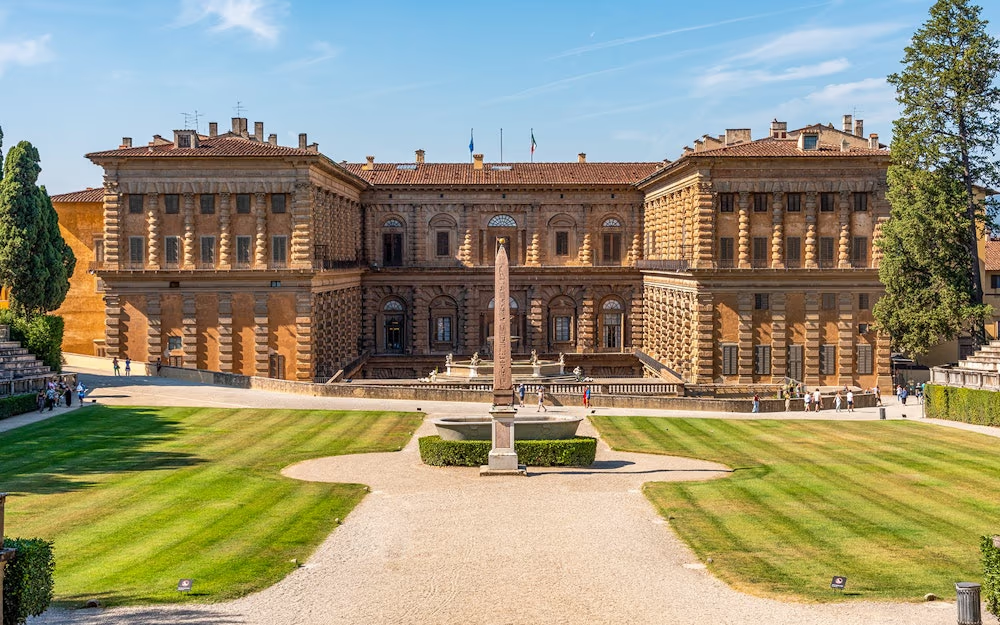
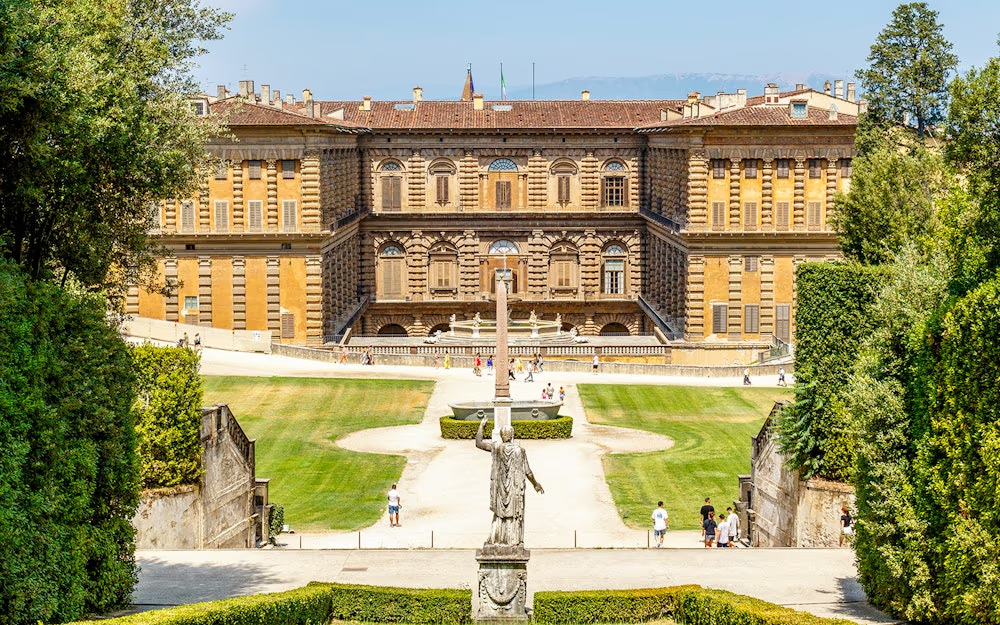
Step out of the Ammannati courtyard and the horseshoe-shaped amphitheatre opens directly above you, centred on a genuine Egyptian obelisk from Luxor. This was the Medici's outdoor theatre for court spectacles; today it is the garden's grand entrance hall and the classic photo of palace and hillside together.
Neptune's Fountain and basin
Climb the terrace above the amphitheatre to the large basin where a bronze Neptune thrusts his trident over the water — Florentines nickname the pool after its fork-wielding resident. Pause here and look back: palace, amphitheatre and the Duomo line up behind you.
The Viottolone cypress avenue
From the top of the garden, the Viottolone — a broad avenue of centuries-old cypresses flanked by statues — dives downhill toward the southern gate. Walking its shaded slope is the single most cinematic stretch of the estate, and in summer the coolest.

The Isolotto
The Viottolone ends at the Isolotto, an oval pond with a small island at its centre, ringed by hedges and crowned by a copy of Giambologna's Oceanus fountain. Citrus trees in terracotta pots decorate the island in the warm months; the encircling basin with its sea-creature statues is a favourite with children.
The Buontalenti Grotto
Back near the palace exit, Buontalenti's artificial grotto (1580s) is the strangest thing in the garden: dripping fake stalactites, frescoed walls and sculpture dissolving into rockwork. Access is limited and often on a scheduled basis — check at the entrance on the day; even from the threshold the first chamber is worth the detour.
The Kaffeehaus
On the eastern slope stands the Kaffeehaus, a green-domed rococo pavilion built for the Lorraine court's coffee breaks — one of the few buildings of its kind in Italy. It serves refreshments seasonally, and its terrace frames a fine view over the city's rooftops.

The Porcelain Museum and the Knight's Garden
At the garden's highest point, the small Casino del Cavaliere holds the Porcelain Museum — table services made for the Medici, Lorraine and Savoy courts — and it is included in the combo. Even if porcelain leaves you cold, climb anyway: the Knight's Garden beside it is a rose-planted terrace looking out over olive groves and the hills of the Oltrarno, the quietest viewpoint on the whole estate.
Practical notes before you go
- The gardens close earlier than the palace. Garden hours are seasonal and follow daylight — check current times on uffizi.it and see the opening hours page for the pattern. Last entry comes well before closing.
- It is a real hillside. Paths are mostly gravel with long climbs. Wear proper shoes, carry water and use sun protection — shade is scarce on the upper terraces in summer.
- Picnicking is restricted. The lawns are historic surfaces and the rules restrict picnicking — check signage on site, and read the visitor rules before packing lunch.
- Toilets and refreshments are sparse. Use the facilities near the palace entrance first; inside the garden the Kaffeehaus operates seasonally.
- Budget your energy. Palace plus gardens is a half-day on your feet — the how long to visit page breaks the timing down.
Palace first or gardens first?
Default: palace first, gardens after. Do the indoor museums while your attention is fresh, then treat the gardens as the decompression — outdoors you set your own pace, and you can trim the circuit if your legs give out. This also matches the natural exit flow, since you leave the estate through the garden gates. Use the palace map to walk the museums top-to-bottom without backtracking first.
Flip it in two cases. In July and August, walk the gardens at 8:15 am before the heat and save the cool galleries for midday. And if you booked an afternoon slot, do the gardens first so the earlier garden closing time cannot cut your visit short. Prefer company? The private tour covers palace and gardens with a licensed guide in one itinerary.
Prices checked in August 2026 against Headout listings; official euro tariffs and seasonal garden hours are set by Le Gallerie degli Uffizi on uffizi.it. If numbers disagree on the day you travel, trust the official site.
Frequently asked questions
Are the Boboli Gardens included in the Pitti Palace ticket?
No. The standard palace ticket covers the five indoor museums only. The gardens need their own ticket or, better, the combo ticket that covers palace, Boboli, the Bardini Garden and the Porcelain Museum in one booking.
Is the Pitti Palace + Boboli combo worth it?
If the weather is even half decent, yes. On Headout the combo costs $39.07 against $46.10 for the pieces separately (15% off), so the gardens effectively cost about $11 on top of the palace — and the combo also throws in the Bardini Garden and the Porcelain Museum.
How long do the Boboli Gardens take?
Plan 1.5 to 2 hours for the main circuit — amphitheatre, Neptune basin, Viottolone and Isolotto — and closer to 3 if you climb to the Porcelain Museum and walk on to the Bardini Garden. Combined with the palace, a full visit is a solid half day.
Can I visit the Boboli Gardens for free?
Ages 0–17 enter free with a reserved ticket, EU citizens aged 18–25 pay a reduced rate, and on the first Sunday of the month state museums are free with no reservations possible — expect long lines that day. Otherwise the gardens are a paid site.
Are the gardens suitable for kids and strollers?
Kids usually love the space after the indoor galleries — room to run, fountains, turtle and obelisk hunting. Strollers are harder work: most paths are gravel and the garden climbs a real hillside, so bring a carrier for small children if you can.
Is the Bardini Garden included in the combo?
Yes. The combo covers the Bardini Garden, a 10-minute walk from the Boboli exit, famous for its wisteria pergola and a terrace view over the whole city. Fit it in the same day — the ticket does not split across days.
Do the gardens close earlier than the palace?
Yes, usually — garden hours follow daylight and change with the season, while the palace keeps museum hours. Check current times on uffizi.it before you pick an afternoon slot, and see our opening hours page for the pattern.